Understanding the Different Types of Roof Decks
When it comes to building or replacing a roof, most homeowners focus on shingles or tiles. But beneath every high-quality roof is a solid foundation—the roof deck.
The roof deck (or sheathing) is the layer between the structural framing (trusses or rafters) and the roofing material. It serves as the base that supports underlayment, shingles, tiles, or other roofing systems.
Choosing the right type of roof deck is crucial for structural integrity, weather resistance, and long-term performance, especially in climates like South Florida, where heat, humidity, and hurricanes play a major role.
🪵 1. Plywood Roof Decking (CDX)
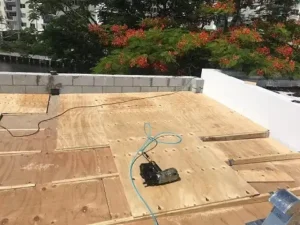
Plywood is one of the most common decking materials used in residential construction.
-
Made of: Cross-laminated wood veneers
-
Strengths: Durable, easy to install, great for high-slope roofs
-
Best For: Asphalt shingles, metal roofing
-
Cons: Can delaminate over time with moisture exposure if not sealed properly
In Florida, CDX plywood is often used for roofs due to its balance of affordability and performance.
🧱 2. Oriented Strand Board (OSB)
OSB is an engineered wood panel made from compressed wood strands and adhesives.
-
Made of: Oriented wood strands in cross-pattern layers
-
Strengths: Affordable, widely available, smooth surface
-
Best For: Most residential roofing systems
-
Cons: Less water-resistant than plywood; swells when soaked
While cost-effective, OSB must be installed with proper ventilation and moisture control, especially in humid areas like Fort Lauderdale.
🧱 3. Concrete Roof Decks
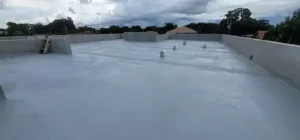
Often used in flat roofing systems or commercial construction, concrete roof decks are strong and highly fire-resistant.
-
Made of: Poured or precast concrete panels
-
Strengths: Extremely durable, non-combustible, mold-resistant
-
Best For: Flat or low-slope roofs, commercial and multi-family buildings
-
Cons: Heavy, requires skilled labor, more expensive
This type of deck is often paired with TPO, PVC, or built-up roofing systems.
🧱 4. Metal Roof Decks
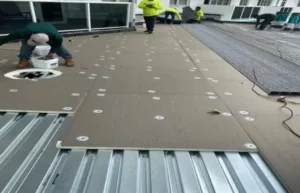
Corrugated metal panels are used as decking in both commercial and select residential applications.
-
Made of: Galvanized steel or aluminum
-
Strengths: Lightweight, quick to install, recyclable
-
Best For: Commercial buildings, some low-slope residential systems
-
Cons: Requires additional insulation; can be noisy during rain
For hurricane-prone areas, metal decks offer excellent wind resistance when installed correctly.
🪵 5. Tongue-and-Groove Wood Decking
Less common today but still seen in older or historic homes, tongue-and-groove decking creates a tight joint between wood planks.
-
Made of: Solid wood (typically pine or fir)
-
Strengths: Visually appealing for exposed ceilings, structural integrity
-
Best For: Historic homes, exposed roof designs
-
Cons: Expensive, heavy, prone to moisture damage if not sealed
🔍 How to Choose the Right Roof Deck
When deciding which type of roof deck is best for your project, consider:
-
Local building codes and wind resistance requirements
-
Your roof type (flat, low-slope, or steep-slope)
-
Your chosen roofing material
-
Moisture levels and ventilation in your attic or crawlspace
-
Budget and long-term maintenance expectations
Always consult a licensed roofing contractor to ensure the decking meets Florida’s hurricane zone requirements.
🛠️ Need Help With Roof Decking in Fort Lauderdale?
At Planet Roofing, we inspect, repair, and replace all types of roof decks. Whether you’re installing a new roof or upgrading your current system, our team ensures your deck is solid, sealed, and storm-ready.
📞 Call (954) 600-1462
🌐 Visit https://planetroofingfl.com