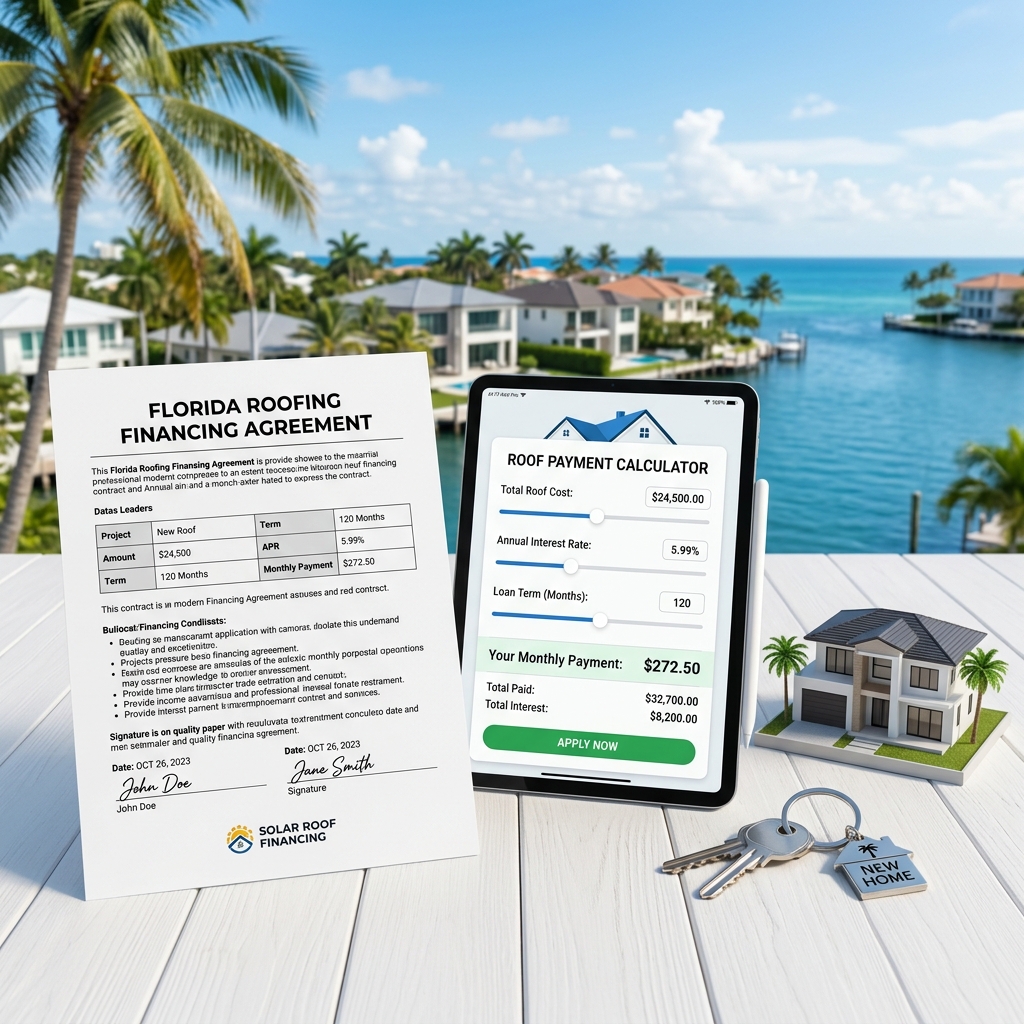
Securing necessary roof financing in Florida is the ideal way for homeowners to replace a compromised roofing system without paying the full cost upfront. Waiting to replace an aging or storm-damaged roof can lead to catastrophic water damage and insurance policy cancellations. Exploring options like the PACE program, low-interest solar financing, or flexible payment plans allows you to protect your residential property immediately.
The Financial Challenge of Roof Replacement in South Florida
Replacing a roof in South Florida is a major financial undertaking. The combination of strict building regulations and severe tropical weather means that a standard roof replacement requires premium materials and meticulous labor. For many families, writing a single check for the entire project is simply not feasible. When a roof begins to leak or an insurance provider demands a replacement within thirty days, finding flexible payment options becomes an urgent necessity to prevent serious structural damage and keep your property insured.
What is PACE Roof Financing and How Does It Repay?
Property Assessed Clean Energy (PACE) is a popular property-based financing structure that helps homeowners fund storm mitigation and energy upgrades, including wind-resistant roofs. Unlike a traditional personal loan, PACE eligibility is primarily based on your home equity and property tax history rather than your personal credit score. The financed amount is repaid as a non-ad valorem assessment on your annual Broward County property tax bill, with terms extending up to twenty or thirty years.
The Difference Between Unsecured Home Improvement Loans and PACE
Traditional home improvement loans are unsecured, meaning they are backed by your creditworthiness rather than your property equity. These loans usually offer rapid approval times and do not require any upfront fees or equity requirements, but they do require a solid credit history to secure a low interest rate. In contrast, PACE is a secured tax assessment, which can be an excellent alternative for homeowners with lower credit scores but significant home equity.
Understanding the Qualifications for Florida PACE Programs
Qualifying for a PACE program in Florida requires meeting specific real estate and tax guidelines rather than traditional debt-to-income ratios. Your property must be located in a participating South Florida municipality, and you must have at least ten percent equity in your home. Additionally, you must be current on your mortgage payments and property taxes, with no active bankruptcies or liens on the home, ensuring the financing is backed by a secure asset.
Exploring Solar and Energy Efficiency Roofing Combinations
Florida homeowners can often combine a new roof installation with energy-efficiency upgrades like solar panel installations or specialized waterproofing sealants. Combining these projects can make you eligible for additional green energy financing programs or federal tax credits, helping to offset the total cost. Premium roofing materials like CertainTeed cool shingles or metal roofing are designed to reduce heat transfer, lowering your daily air conditioning expenses in our hot climate.
The South Florida Climate and Strict Building Code Demands
South Florida properties are located within the High Velocity Hurricane Zone (HVHZ), where the Florida Building Code mandates that all new roofs withstand wind speeds exceeding 150 miles per hour. Because meeting these strict safety standards requires specialized underlayment, enhanced nailing patterns, and heavy-duty materials, the cost of a compliant roof is naturally higher than in other regions. Choosing a qualified Fort Lauderdale roofing contractor ensures that all local Broward County permitting is handled correctly, safeguarding your home and maintaining your homeowners insurance policy.
What to Do Next to Secure Roof Financing
Navigating the financing process is much simpler when you take structured, practical steps. Here is the path to securing the right payment plan:
- Request a Roof Assessment: Obtain a written inspection from a licensed roofing contractor to determine the exact repair or replacement scope.
- Review Your Home Equity: Check your current mortgage balance and estimated property value to see if you qualify for equity-based options like PACE.
- Compare Multiple Financing Paths: Evaluate traditional personal loans, specialized PACE terms, and manufacturer promotions to find the lowest monthly impact.
- Read the Agreement Details: Carefully analyze the interest rates, administration fees, prepayment penalties, and property tax implications of your chosen program.
- Select a Certified Contractor: Partner with a licensed professional holding credentials like GAF or Owens Corning certifications to ensure your investment is fully warrantied.
Frequently Asked Questions About Florida Roof Financing
How does PACE roof financing affect selling a Florida home?
When selling a home with active PACE financing, the remaining balance must typically be paid off at or before closing, as many buyers and mortgage companies refuse to assume the property tax assessment. Some buyers may negotiate for you to cover this cost using sale proceeds, so it is vital to disclose the assessment early. Working with a knowledgeable Fort Lauderdale contractor can help you weigh these resale factors before choosing PACE.
What is the typical timeline to get approved for roof financing?
Traditional unsecured roofing loans can be approved in as little as 24 to 48 hours with minimal documentation required. PACE programs and government-backed options can take one to two weeks, as they require property evaluations, title checks, and local county approval. Planet Roofing coordinates directly with financing partners to expedite your application, ensuring your project starts as quickly as possible.
Can homeowners with bad credit secure roof financing in Florida?
Yes, Florida homeowners with credit challenges can still finance a new roof through equity-based options like the PACE program, which evaluates home equity and tax history rather than credit scores. Some specialized contractors also offer in-house payment programs or bad-credit financing solutions. Planet Roofing helps South Florida residents explore all eligible avenues to find a monthly payment plan that fits their budget.
Is it better to finance a roof or pay cash in South Florida?
While paying cash avoids interest charges, financing a roof allows you to preserve your household savings for unexpected emergencies or storm-related repairs. Financing also makes it easier to upgrade to premium, high-wind-resistant materials like standing-seam metal or concrete tile, which provide superior protection during hurricane season. A professional contractor can provide a side-by-side comparison of cash and financing options for your project.
Why do Florida insurance companies require roof replacements for older homes?
Florida insurance underwriters often refuse to renew policies on homes with shingle roofs older than fifteen years or metal roofs older than twenty-five years, regardless of their visual condition. Insurers view older roofs as a high risk for failure during a tropical storm, which could lead to severe interior water damage claims. Financing a prompt replacement helps you maintain your insurance coverage and protect your home's structural integrity.