Florida homeowners need roofing systems that are engineered to withstand extreme winds, relentless wind-driven rain, and volatile tropical conditions. Hurricane mitigation roofing focuses on reinforcing a property's most vulnerable areas to improve structural integrity and protect lives. By upgrading these critical features during a roof replacement or major repair, you can significantly reduce the potential for storm damage and lower your ongoing property insurance costs. Preparing your roof early is the most effective way to ensure long-term safety and financial security in South Florida.
Understanding Local Building Codes & Storm Ratings
South Florida is designated as a High Velocity Hurricane Zone (HVHZ), which has some of the strictest building codes in the nation. Under the Florida Building Code, roofing installations in Fort Lauderdale must be engineered to withstand wind speeds up to 170 mph. When replacing your roof, every material used—from the nails to the shingles, tiles, or metal panels—must have an active Florida Product Approval or Miami-Dade Notice of Acceptance (NOA) to certify its strength against severe storms. Contractors must pull formal building permits and have their work verified by local city inspectors at multiple stages of the installation process to guarantee full structural compliance.
Main Hurricane Mitigation Upgrades
To secure your home against uplift forces, your roofing contractor must focus on several vital structural components. These upgrades work together to create a continuous, reinforced barrier that prevents wind and moisture from breaching your attic space:
- Secondary Water Barrier (SWR): A self-adhering polymer-modified bitumen sheet, often called a peel-and-stick underlayment, is applied directly to the wood decking. If the main roof covering is blown away by high winds, this underlayment seals the seams and prevents catastrophic water intrusion into the home.
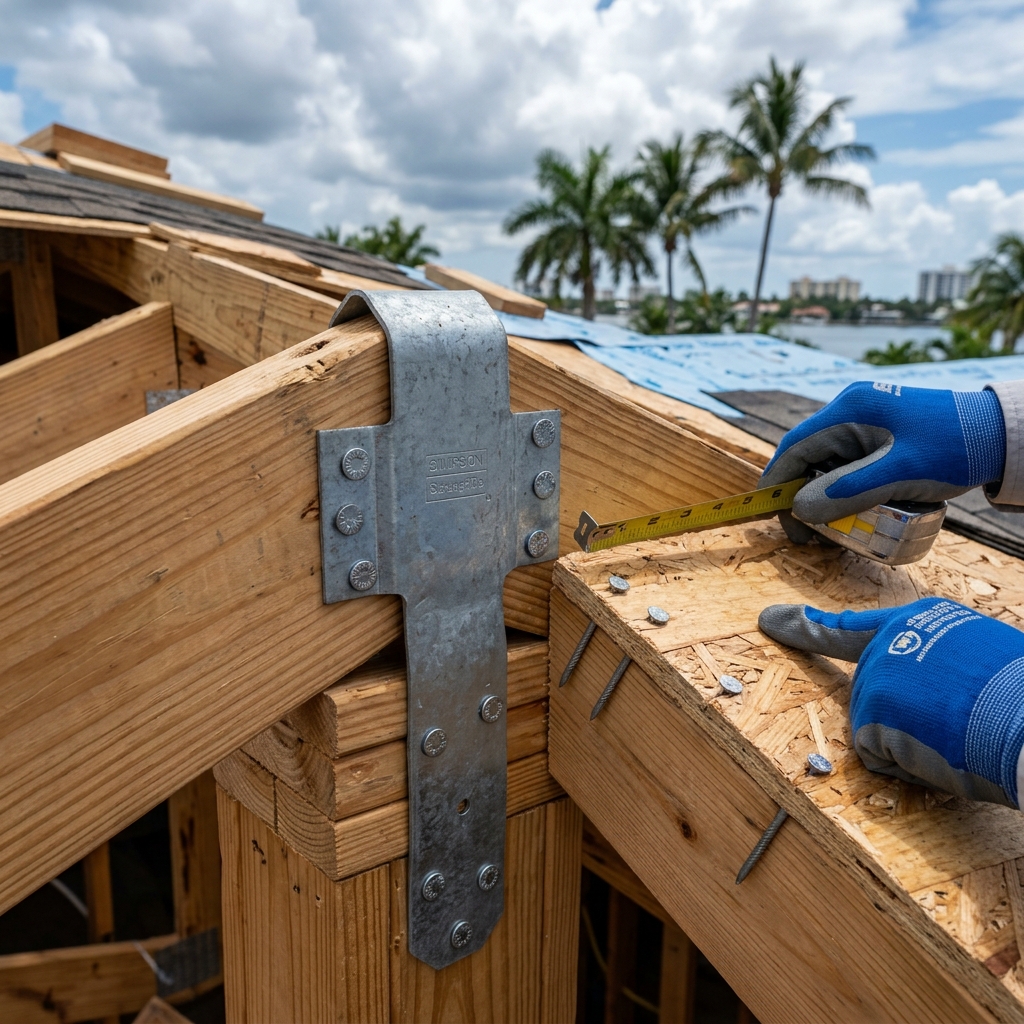
- Upgraded Roof Deck Attachment: During a replacement, the plywood sheathing must be completely re-nailed. Building codes require 8d ring-shank nails spaced every 6 inches along the edges to resist the severe upward suction created by high-velocity wind zones.
- Roof-to-Wall Connections: Heavy-duty metal hurricane straps or clips must securely anchor the roof trusses to the concrete or wood walls of the structure. Retrofitting these clips during a replacement helps transfer extreme wind forces directly to the foundation, preventing the entire roof from lifting off during storm events.
Timeline: When to Prepare for Storm Season
Homeowners should plan their hurricane preparedness upgrades well in advance to avoid long permit lead times and active storms. Waiting until a major storm enters the Caribbean can result in material shortages and contractor unavailability. Follow this timeline to ensure your property is fully protected:
- January – April (Pre-Season Planning): The dry winter and spring months are the ideal window to schedule a professional roof inspection. This allows ample time to pull permits and complete structural upgrades or full replacements before storm threats begin on June 1st.
- May (Final Preparedness): Cut back hanging tree branches that could fall onto your roof, clear valleys of dry leaves, clean out gutters to facilitate drainage, and ensure all scuppers and downspouts are completely free of debris.
- June 1 – November 30 (Hurricane Season): Monitor active weather patterns. If a tropical storm or hurricane warning is issued, perform a final visual check around your roof edge, soffits, and gutters, and secure all exterior loose items.
Emergency Contact Checklist
In the event of an impending storm or immediate post-storm roof damage, keep this local Broward County emergency contact directory easily accessible. Knowing who to call immediately after a severe wind event can prevent minor structural damage from turning into a total loss:
- Broward County Emergency Management: (954) 831-3900 - For emergency shelters, storm updates, and disaster relief programs.
- City of Fort Lauderdale Building Department: (954) 828-6520 - For permit questions and emergency repair guidelines.
- Florida Power & Light (FPL) Outages: 1-800-4-OUTAGE - To report downed lines and check power restoration status.
- Federal Emergency Management Agency (FEMA): 1-800-621-FEMA - For federal assistance applications following a major storm.
Takeaway: Inspect Before the Storm
Hardening your roof against high winds is a critical investment in your South Florida home's longevity. By choosing code-compliant materials, ensuring proper roof deck fastening, and applying a robust secondary water barrier, you establish a resilient line of defense. Do not wait for a major hurricane warning to assess the condition of your home's most important protector. Connect with a local professional today to schedule a detailed storm-readiness assessment and ensure your roof meets the latest wind mitigation criteria.
Hurricane Mitigation FAQ
How much does a wind mitigation inspection cost in Fort Lauderdale?
A typical wind mitigation inspection in Fort Lauderdale costs between $100 and $250. This inspection is a valuable investment because it documents your roof's storm-resistant features, which can lead to substantial discounts on your homeowner's insurance premiums.
Is a professional wind mitigation inspection required for insurance discounts?
Yes. Insurance carriers in Florida require a standard wind mitigation inspection form completed by a licensed home inspector, architect, or engineer to qualify for insurance credits. A homeowner cannot self-certify these upgrades.
When is the ideal time to complete hurricane roofing upgrades?
The ideal time to complete roofing upgrades is before the start of hurricane season on June 1st. Planning your roof replacement or reinforcement during the dry winter and spring months ensures the project is completed before active storms threaten the area.
Does a secondary water barrier prevent interior damage during a storm?
Yes. A secondary water barrier, such as a self-adhering polymer-modified bitumen underlayment, seals the plywood seams. If high winds rip away shingles or tiles, this barrier prevents rain from entering the attic and causing interior water damage.
Can a general contractor perform hurricane roofing work in Broward County?
No. Roofing installations, repairs, and secondary water barrier applications must be completed by a licensed roofing contractor holding a valid Florida license (such as CCC1329271). Always verify that your contractor is licensed and insured specifically for roofing work.