Flat Roofing in South Florida
Commercial & Residential Experts
Flat roofs are widely used on commercial buildings and residential patios, but they require expert slope design to handle Florida's heavy rain. Learn about modified bitumen, ponding water, and silicone coatings.
The Importance of Proper Slope and Drainage on Flat Roofs
A flat roof is not actually flat; it is low-slope. To satisfy building codes and prevent structural damage, the system must have at least a 1/4-inch slope per foot to direct rainwater to drains.
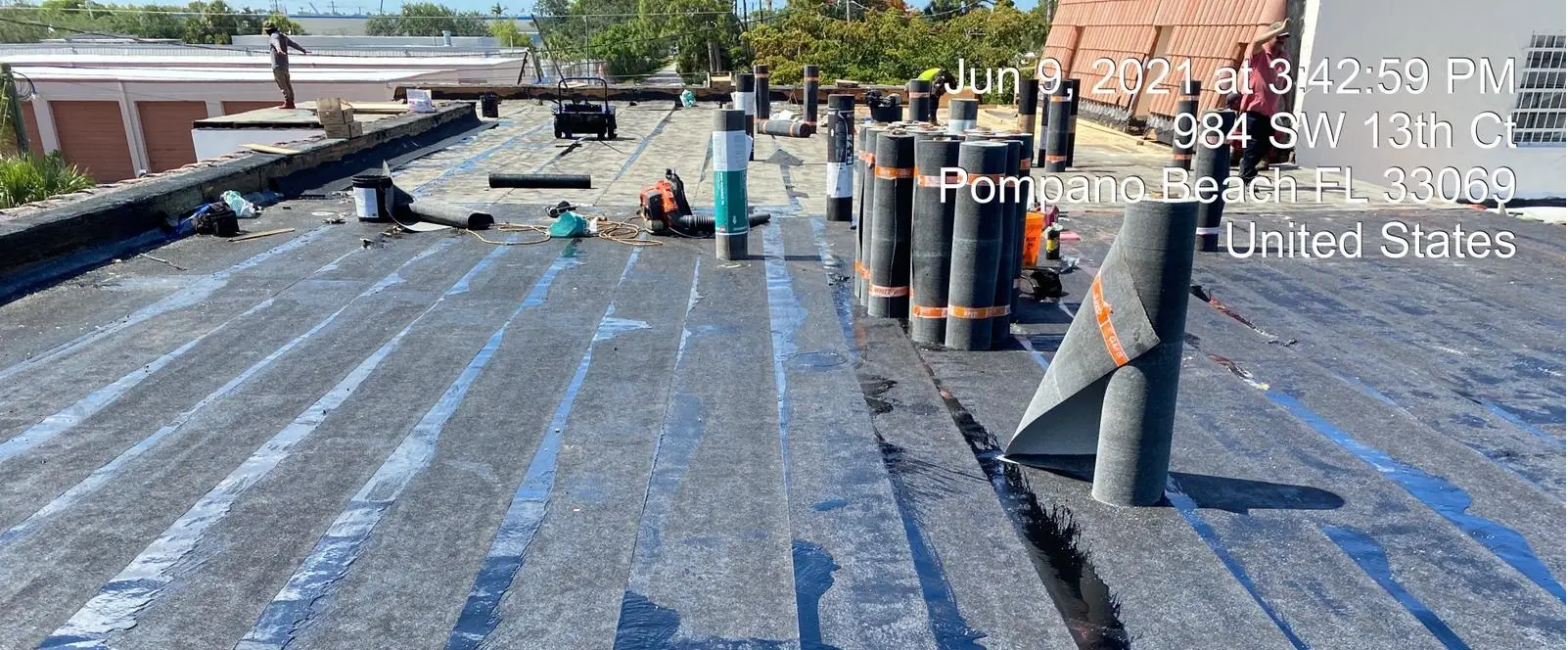
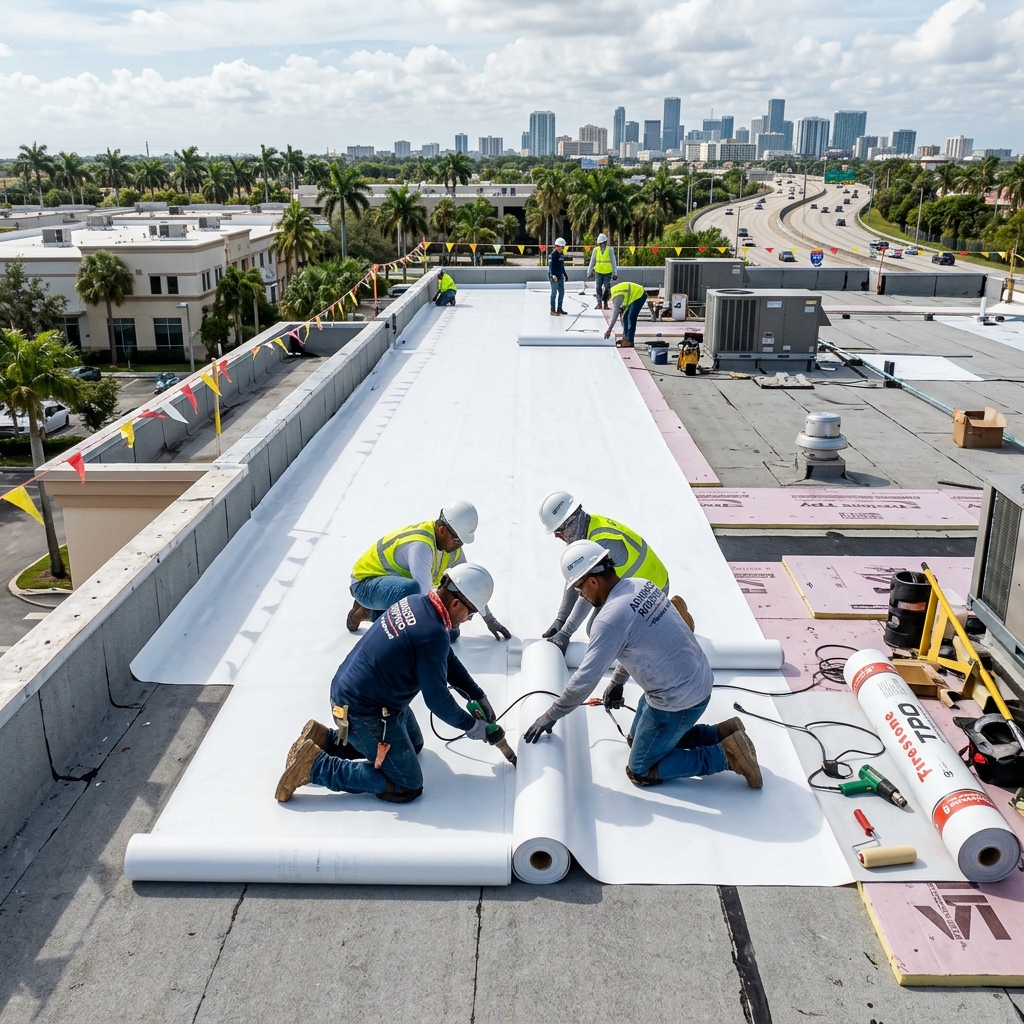
For South Florida residential extensions and commercial spaces, modified bitumen (multi-layered asphalt sheets modified with rubber or plastic) and **built-up roofing (BUR)** are highly common. These systems provide tough, multi-layered water resistance. When coated with a reflective white silicone layer, flat roofs reflect up to 85% of solar UV rays, lowering internal temperatures and reducing HVAC load.
How Long Does a Flat Roof Last in Florida?
A typical residential or commercial flat roof lasts between 15 and 25 years in South Florida, depending on maintenance and drainage.
The biggest threat to flat roofs in South Florida is **ponding water** (standing water that remains on the roof for over 48 hours). The weight of ponding water deflects the roof deck, and standing water accelerates the breakdown of the asphalt membrane. Installing tapered insulation to create a slope and applying high-solids silicone coatings are key strategies to extend flat roof lifespan.
Factors that Degradate Flat Roofs in South Florida
Be aware of these local threats to low-slope systems:
- Ponding water - Standing water degrades materials and seams rapidly.
- UV rays - Intense sunlight dries out asphalt, causing cracking and alligatoring.
- Seam separation - Expansion and contraction can pull seams apart, letting water in.
- Clogged scuppers & drains - Leaves and debris block water flow, causing backing up.
- Inadequate insulation - Lack of proper insulation can lead to interior condensation.
Flat Roof Repair: What Can Be Fixed and What Can't
Isolated seam separations or flashing damage can be repaired, but systemic moisture saturation inside the insulation requires a full tear-off.
Flat roof repairs must address the core source of leaks. Here is a comparison of what can be fixed versus what requires a re-roof:
What Flat Repair Can Fix
- Separated seams (re-sealed using hot-air welding or cold adhesive)
- Damaged pipe boot flashings or gravel stops
- Small blisters or bubbles in the modified bitumen cap sheet
- Applying silicone roof coatings to sound, dry membranes
What Flat Repair Cannot Fix
- Wet, saturated insulation boards under the membrane
- Widespread ponding caused by structural deck deflection
- Membranes that have alligatored systemically (severely cracked)
- Roofs with more than 25% moisture saturation verified by infrared tests
If your flat roof is in decent shape but has reached the end of its design life, a liquid-applied silicone restoration system can avoid a costly tear-off. Planet Roofing can run physical inspections to confirm if your roof is a candidate for a coating.
The 6 Steps of Flat Roof Installation
Planet Roofing installs residential and commercial flat roof systems using premium materials and code-compliant techniques to ensure structural safety and long-term waterproofing.
- Tear-off - The old flat roof membrane and saturated insulation are completely removed.
- Deck repair & leveling - Any rotted wood or concrete decking is repaired to create a level foundation.
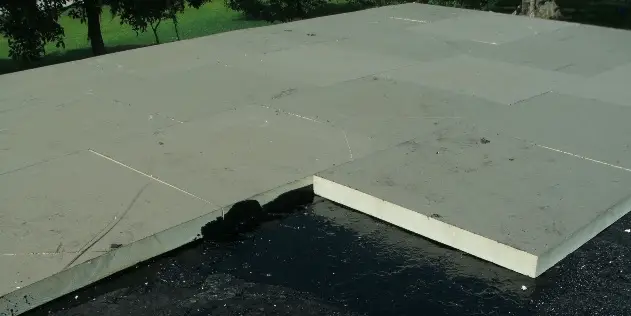
- Tapered insulation layout - Sloped insulation boards are fastened to direct water toward drains.
- Base sheet installation - A heavy-duty fiberglass base sheet is mechanically fastened or adhered.
- Cap membrane installation - Layers of modified bitumen sheets are hot-mopped, torched, or self-adhered.
- Detailing & flashings - Drains, scuppers, pipe boots, and edge metal are installed and sealed with liquid flashing.
Low-slope roofs must comply with strict drainage codes to prevent standing water. Planet Roofing handles the entire engineering and inspection process for code compliance.
Common Questions About Flat Roofing
Answers to top questions about flat roof replacements, ponding water, silicone coatings, and lifetimes in South Florida.
How much does a flat roof replacement cost in South Florida?
A flat roof replacement typically ranges from $7 to $14 per square foot, depending on the material (modified bitumen, TPO, or built-up roofing), deck insulation requirements (tapered systems to establish slope), and roof size. Commercial properties or large residential patios will vary based on access and complexity. Planet Roofing offers transparent, detailed written estimates.
What is ponding water and how does it damage flat roofs?
Ponding water is standing water that remains on a flat roof for more than **48 hours** after rain has stopped. The weight of the water creates deflection in the roof deck, and constant moisture accelerates the degradation of modified bitumen membranes and seams, leading to leaks. Planet Roofing addresses this by installing tapered insulation to direct water toward drains.
Can I apply a roof coating instead of replacing my flat roof?
Yes. If your flat roof membrane is structurally sound, less than **25% wet**, and the seams are in good condition, applying a high-solids silicone or elastomeric roof coating can restore waterproofing and extend the life of the roof by **5 to 10 years** at a fraction of the cost of replacement. Planet Roofing performs physical moisture tests to verify coating eligibility.
How long does a flat roof last in South Florida?
A high-quality modified bitumen or built-up flat roof lasts between **15 and 25 years**. The intense UV heat, heavy storms, and temperature changes in South Florida put high stress on flat systems, making regular inspection and proper slope/drainage critical.
Are flat roofs prone to leaking?
Flat roofs are not naturally prone to leaking if they are installed with proper slope, high-quality waterproofing membranes, and correct flashing around edges and penetrations. Leaks typically happen due to standing water, failing seams, or poor installation around detail areas like pipes, drains, and scuppers.
Need a Licensed Flat Roof Contractor?
Call Planet Roofing today for roof repair, roof replacement, roof inspection, financing options, and code-compliant roofing service in Broward County and South Florida.
Visit Planet Roofing
100 N Federal Highway, Fort Lauderdale, FL 33301
Schedule a Roofing Inspection or Estimate
An on-site evaluation can help identify visible roof damage, possible leak sources, maintenance concerns and suitable repair or replacement options.
Planet Roofing serves residential and commercial property owners throughout Broward, Miami-Dade and Palm Beach counties. Contact our team to discuss your roof type, current concerns and project schedule.