A professional wind mitigation inspection is a highly valuable assessment that verifies your Fort Lauderdale home's storm-resistant features to secure substantial discounts on your homeowners insurance premiums. In South Florida's volatile insurance market, demonstrating that your roofing system complies with strict wind building codes is the most reliable way to lower annual coverage costs. Investing in this certified report validates your home's structural strength while offering significant financial returns.
Why This Season Matters for Fort Lauderdale Roofs
As June marks the onset of the Atlantic hurricane season, homeowners in Fort Lauderdale face a six-month period of heightened risk from intense tropical storms and severe wind events. Over the years, the cumulative impact of extreme heat, torrential rain, and strong winds degrades older roofing systems, leaving homes vulnerable to structural breaches. Securing a certified wind mitigation inspection before the peak of storm activity is a crucial preemptive action to confirm your roof can withstand extreme pressures.
The Essential Wind Mitigation Action Plan for Broward Homeowners
Preparing your property for severe wind events requires evaluating specific building features that underwriters review when calculating your insurance risk. Here is the key checklist of items evaluated during a wind mitigation inspection:
- Roof Covering Age and Permitting: The inspector verifies the installation date of your shingles, tile, or metal panels. In Florida, roof systems installed after the 2001 Florida Building Code revision automatically qualify for substantial insurance discounts.
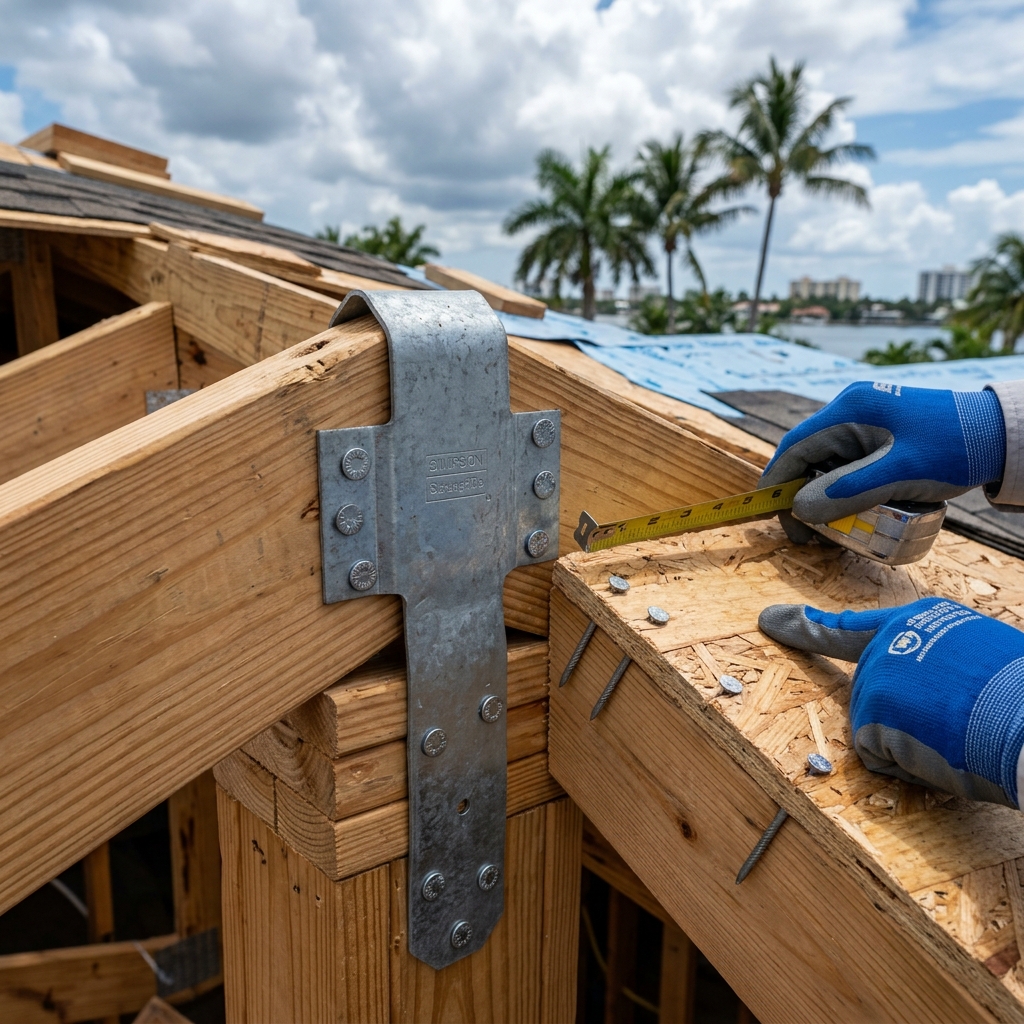
- Roof Deck Attachment Strength: The inspection documents the size and spacing of the fasteners securing your roof deck to the trusses. Utilizing 8d ring-shank nails spaced at six-inch intervals provides superior resistance to wind uplift forces.
- Roof-to-Wall Connector Integrity: The connectors holding your roof trusses to the exterior wall plates are evaluated. Heavy-duty metal straps or hurricane clips featuring at least three nails provide the strongest resistance to wind damage.
- Roof Geometry and Profile: The shape of your roof plays a critical role in aerodynamics. Hip roofs, which slope downward on all four sides, experience significantly less wind resistance and qualify for higher discounts than gable profiles.
- Secondary Water Barrier (SWR) Seal: The presence of a self-adhering polymer membrane beneath the primary shingles is documented. This secondary seal prevents water intrusion even if the exterior shingles are torn away during a hurricane.
- Opening Protection Coverage: The inspector checks all exterior windows, entry doors, and garage doors for impact resistance. Having certified shutters or impact-rated glass across all openings protects the home from interior pressurization and structural collapse.
What You Can Check Yourself vs. What Needs a Licensed Roofer
What Homeowners Can Safely Assess From the Ground
You can safely perform a visual walk-around of your property to identify obvious signs of storm wear without climbing a ladder. Look for missing or curling shingles, damaged flashing near chimney valleys, and loose or clogged gutters. Indoors, check your ceilings for sudden water stains, peeling paint, or damp spots after a heavy storm, which are clear indicators of a compromised roof system.
What Requires a Licensed Contractor
Evaluating the structural integrity of your roof deck, measuring nail spacing, and confirming truss strap connections require a state-licensed contractor. Climbing onto a high-pitched roof or entering a tight attic space presents severe safety hazards. A certified professional possesses the training and tools to document secondary water barriers and flashing seals to satisfy strict underwriting standards.
A Note on Insurance Claims After Storm Damage
If your property suffers wind or water damage during a South Florida storm, documenting the loss immediately is vital. Homeowners should take detailed photos of all interior and exterior damage and contact a state-licensed roofing contractor to secure a written inspection report within thirty days of the storm. Partnering with a licensed local contractor like Planet Roofing (license CCC1329271) ensures your storm damage documentation is structured correctly to streamline the insurer's review process.
Frequently Asked Questions
How does a wind mitigation inspection help with insurance claims in Fort Lauderdale?
A wind mitigation inspection provides a certified engineering report that documents your home's wind-resistant construction features. If a storm causes structural damage, having this pre-storm certificate on file helps establish a clear baseline of your roof's condition to support your insurance claim process in Broward County.
What should a homeowner do immediately after a severe storm passes?
Homeowners should immediately check their property for visible exterior damage from the safety of the ground and inspect interior ceilings for new water stains. It is crucial to document any findings with clear photos and contact a licensed roofing contractor like Planet Roofing to conduct a professional assessment before scheduling structural repairs.
How can I tell if my roof's storm damage is serious enough to warrant replacement?
Storm damage is considered serious if there is widespread granule loss, multiple missing shingles, cracked underlayment, or active water leaks in the attic. A professional inspection will determine if the water has penetrated the structural plywood decking, which requires immediate attention to prevent rot and mold.
What is the typical timeline for storm-related roof repairs in Broward County?
The timeline for storm-related roof repairs can range from a few days for minor flashing fixes to several weeks if a complete replacement is required. Securing the necessary building permits in Fort Lauderdale and passing municipal code inspections represent the longest phases of the project timeline.
Should I hire a storm-chasing contractor for post-storm roof repairs?
No, homeowners should never hire out-of-state storm-chasing contractors who arrive immediately after a hurricane, as they often lack local licensing and provide unreliable workmanship. Always choose a state-certified contractor with a physical presence in Broward County to ensure your warranties remain valid and permits are pulled correctly.