South Florida property owners prepare their roofs for solar panel installation by conducting age evaluations, reinforcing structural decking, choosing durable solar-ready materials, and sealing penetrations. Installing solar racking onto a compromised or aging roof leads to expensive future removal costs and severe structural leaks during storm season. Planning a solar-ready roof installation immediately protects your home's integrity while supporting long-term renewable energy efficiency.
Why Does Solar Installation Require a Pre-System Roof Evaluation?
Rooftop solar panels are a long-term investment designed to generate renewable energy for twenty-five years or more. However, mounting heavy racking systems and solar arrays onto an aging or physically damaged roof envelope is a recipe for financial disaster. If your shingles, tiles, or flat roof membranes fail after the solar array is active, you must pay thousands of dollars to decommission, store, and reinstall the panels just to perform a roof replacement. Conducting a thorough pre-system evaluation ensures that your roof decking, flashing, and underlayment are in pristine condition to support the weight and wind loads of the panels.
The Essential Steps for Achieving a Solar-Ready Roof
1. Evaluating Roof Age and Remaining Material Lifespan
Before scheduling any solar installation, you must verify the remaining useful life of your underlying roof. If your current shingles or tiles are more than ten years old, completing a proactive roof replacement first is highly recommended. Aligning the lifespan of your roof envelope with the twenty-five-year warranty of your solar panels eliminates the need for premature, highly expensive equipment removal.
2. Ensuring Structural Integrity and Wind-Load Capacity
A complete solar array adds significant dead weight to your residential roof framing. Additionally, the panels act as giant sails that increase wind uplift forces during tropical storms and hurricanes. A professional inspection determines if your trusses, rafters, and plywood decking are strong enough to support these additional dynamic loads safely under South Florida building regulations.
3. Selecting a Solar-Ready Material for Long-Term Durability
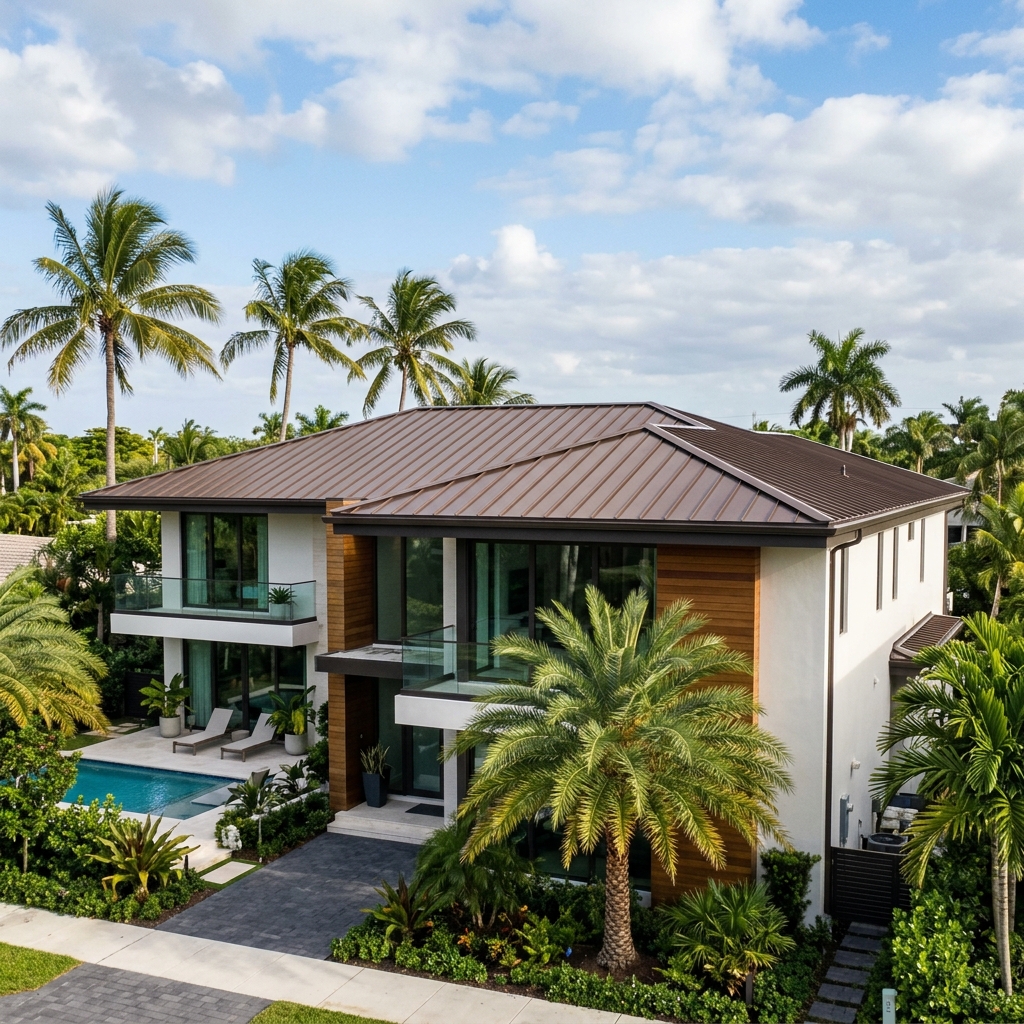
Standing seam metal roofing represents the premier solar-ready option because installers can clamp brackets directly to the raised seams. This completely eliminates the need to drill screw penetrations into your roof deck, preserving your waterproofing envelope. If you choose shingles or concrete tiles, high-grade self-adhering underlayments must be applied to prevent leaks around mounting plates.
4. Implementing Advanced Waterproofing Around Rack Penetrations
Solar mounts require structural fasteners that pass directly through the roofing material and into your rafters. If these connection points are not flashed and sealed with high-performance marine-grade sealants, water will eventually seep in during heavy rains. Professional roofing coordination ensures that every single penetration is double-flashed to guarantee a permanently watertight barrier.
How Do Hurricane Wind Standards Impact Solar Rooftops?
Fort Lauderdale is situated in a High Velocity Hurricane Zone (HVHZ), which dictates the most rigorous wind-mitigation and engineering standards in the nation. Under Broward County codes, solar mounting hardware must be engineered to withstand wind gusts up to 170 miles per hour without detaching or damaging the roof. Working with a certified, licensed contractor like Planet Roofing (licenses CCC1329271 and CGC1517295) ensures that your roofing permit is properly structured to accommodate future solar loads safely.
What Actions Guarantee a Successful Solar Roof Preparation?
1. **Schedule a Structural Roof Assessment:** Have a certified roofing contractor evaluate the current condition, age, and decking strength of your roof.
2. **Choose a Clamping or Double-Flashed Mounting System:** Select attachment methods that minimize or eliminate penetrations through your waterproofing barrier.
3. **Coordinate Timelines Between Contractors:** Ensure your roofer installs the solar-ready system before the solar technicians begin mounting panels.
4. **Acquire Joint Permitting and Approvals:** Confirm that all building permits include engineering calculations for both the roof replacement and solar weight.
5. **Request a Written Material and Labor Warranty:** Secure transferrable warranties that protect your home from leaks caused by subsequent racking installation.
Frequently Asked Questions
What is the typical cost of a solar-ready roof in Fort Lauderdale?
The cost of a solar-ready roof replacement in Broward County ranges from $10,500 to $42,000, depending on the material, roof area, and structural reinforcements. Standing seam metal roofs represent a larger upfront investment but eliminate penetration risks, making them the most cost-effective long-term pairing for solar. Planet Roofing provides detailed written estimates to help you choose a durable option that fits your budget.
How long does the active phase of solar roof installation take to complete?
The physical installation of a new, solar-ready roof typically takes between three to six days to complete, depending on the material selected. However, the complete process—including engineering calculations, Broward County permit approvals, and final inspections—takes approximately three to five weeks. Coordinating this timeline with your roofing company early ensures your home is structurally ready before your solar panels arrive.
Is it safe to install solar panels through a DIY approach?
No, DIY solar and roof installation is highly dangerous and legally prohibited in Florida due to complex HVHZ electrical and structural codes. Homeowners must hire licensed roofing and electrical contractors to secure necessary municipal building permits and pass local inspections. Attempting a DIY installation will immediately void all manufacturer warranties, compromise your storm safety, and lead to home insurance cancellation.
Can a solar-ready roof lower my annual property insurance premiums?
Yes, upgrading your roof to meet modern wind-resistance standards before installing solar panels qualifies you for substantial wind-mitigation insurance discounts in Florida. Features like secondary water barriers, reinforced roof-to-wall connectors, and impact-resistant materials significantly lower your storm risk. These upgrades convince insurance carriers that your home is highly resilient, helping you secure lower premium rates.
Should you replace your roof before installing solar panels?
Yes, if your roof is older than eight to ten years, replacing it before installing solar panels is the smartest financial decision. Decommissioning, removing, and reinstalling a solar array to perform a future roof replacement can easily cost an extra $4,000 to $8,000 in labor. Completing a fresh roof replacement with Planet Roofing provides a secure, warrantied foundation that lasts as long as your solar array.