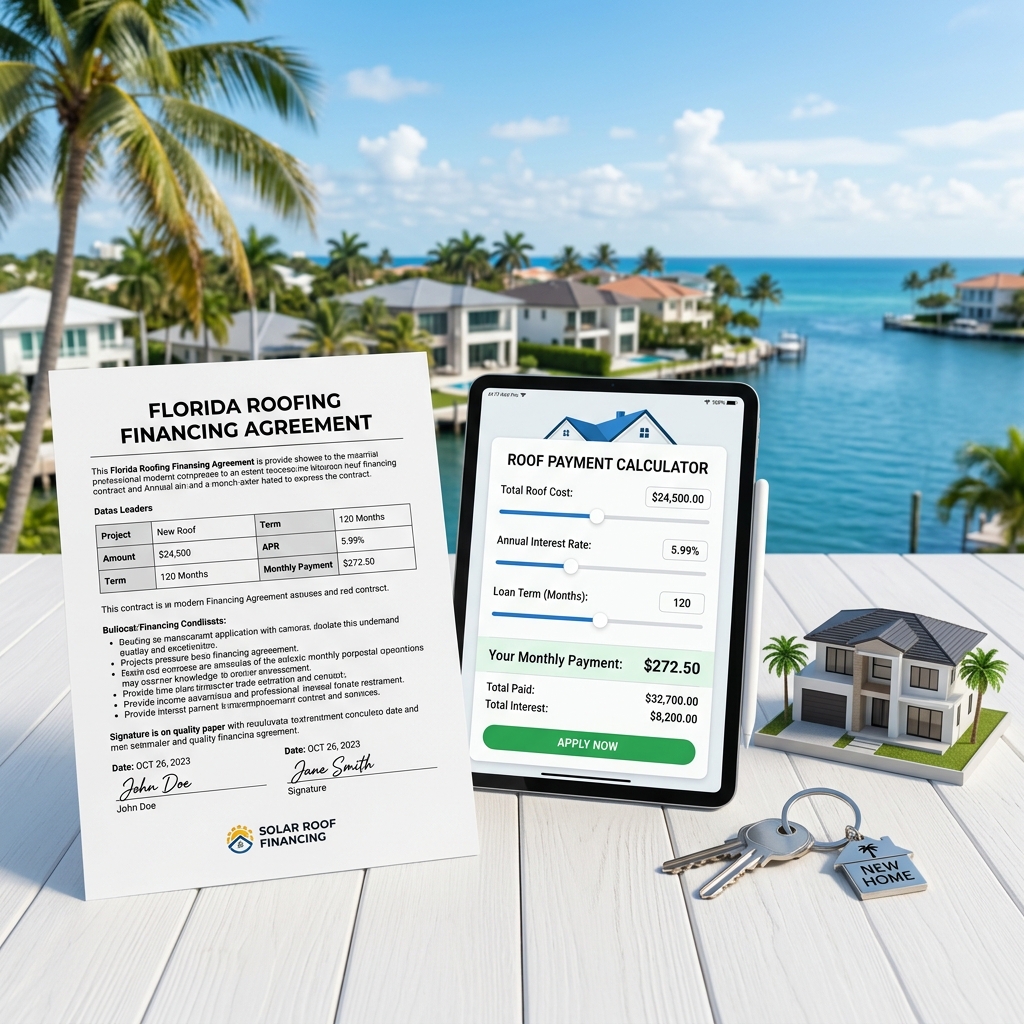
Florida homeowners can access several federal, state, and local assistance programs to finance a necessary roof replacement. Because local housing codes mandate extreme wind-resistance measures, installing a new roof represents a significant financial undertaking. Utilizing designated public grants, low-interest government loans, and private payment options helps you maintain structural protection without exhausting your household savings.
Why Do Florida Homeowners Need Financial Assistance?
Failing roofs in South Florida pose severe safety risks, making immediate replacement critical before the start of hurricane season. Severe windstorm exposure, high ambient humidity, and intense ultraviolet radiation accelerate the degradation of standard roofing shingles. When a roof begins to leak, it quickly causes interior structural rot, mold infestation, and immediate homeowner insurance policy non-renewals. Because Broward County building codes require specialized materials designed to withstand winds of up to 170 miles per hour, the total cost of installation is elevated, making public financial assistance programs vital for safeguarding residential properties.
What Programs Can Help You Pay for a Roof in Florida?
1. The My Safe Florida Home Mitigation Grant
The state-funded My Safe Florida Home program provides wind-mitigation inspections and matching grants for storm-hardening upgrades. Eligible homeowners can receive up to $10,000 to cover two-thirds of the cost of reinforcing roof-to-wall connections, installing secondary water barriers, and upgrading to impact-resistant shingles or tiles. This program significantly lowers your out-of-pocket costs while lowering your annual property insurance premiums.
2. Federal Housing Administration (FHA) Title I Loans
Backed by the federal government, FHA Title I loans offer an accessible way to fund major home improvements, including complete roof replacements. You can borrow up to $25,000 through approved lenders without needing substantial equity in your property. These loans feature fixed interest rates and flexible terms of up to twenty years, making them ideal for families needing immediate structural repairs.
3. USDA Section 504 Rural Home Repair Program
For qualifying low-income homeowners situated in designated rural areas of Florida, the USDA Section 504 program provides vital repair assistance. Homeowners can secure loans up to $40,000 at a fixed one percent interest rate to remove health and safety hazards. Elderly residents aged sixty-two or older may qualify for lifetime home repair grants of up to $10,000 that do not require repayment.
4. Property Assessed Clean Energy (PACE) Programs
PACE financing offers a non-traditional way to pay for wind-resilient roofing with no upfront cash required. The financing is secured by your property, and approval is based on your home equity rather than your personal credit score. Repayments are structured as a special assessment added to your annual Broward County property tax bill, allowing for long-term amortization over fifteen to thirty years.
How Do Different Roof Assistance Options Compare?
Navigating these public programs in South Florida requires understanding how each matches your property type and income level. Coastal Broward County homes are prime candidates for My Safe Florida Home wind-hardening grants due to high storm risks, while PACE financing serves those prioritizing credit flexibility. Reviewing the interest rates, qualification criteria, and repayment terms across all available programs ensures you choose the smartest financial structure for your property.
How Can You Qualify for Florida Roof Programs?
1. **Confirm Your Property Location:** Check if your home sits within a designated rural zone for USDA funding, or a high-wind hurricane zone for wind-hardening state grants.
2. **Analyze Your Household Income:** Gather your tax returns and proof of income, as programs like the USDA Section 504 loan are strictly reserved for low-income brackets.
3. **Assess Your Property Equity:** Determine your loan-to-value ratio, which is the primary factor used to calculate eligibility for PACE financing programs.
4. **Schedule a Professional Inspection:** Obtain an official roof wind-mitigation inspection to document structural weaknesses and define the necessary scope of work.
5. **Review Your Homeowner Insurance Policy:** Work with your insurer to see if documented storm damage can be combined with public funds to lower your total out-of-pocket costs.
How Can Planet Roofing Help You Secure Your Funding?
The experienced team at Planet Roofing helps you navigate the complex paperwork and technical requirements of Florida roof assistance programs. We provide compliant diagnostic inspections, official wind-mitigation reporting, and direct support for PACE and state grant applications to ensure your project receives maximum funding. Our goal is to ensure your Fort Lauderdale home achieves complete storm safety without financial stress.
Frequently Asked Questions
What is the My Safe Florida Home grant maximum limit?
The My Safe Florida Home program provides eligible homeowners with a matching grant of up to $10,000 for qualifying wind-mitigation upgrades. Under the matching rules, the state provides two dollars for every single dollar you spend on your home's storm-hardening improvements. This program is highly popular in Broward County and requires a professional pre-inspection by a state-approved inspector before construction starts.
How does PACE roof financing work in South Florida?
PACE financing allows you to secure funding for a new roof based on your property equity rather than your credit score. The total cost of the roof replacement is repaid through a special non-ad valorem assessment added to your annual property tax bill. This billing structure attaches the loan obligation to the physical property, allowing the balance to potentially transfer to a new owner if you sell the home.
Is it possible to combine insurance claims with government roof grants?
Yes, you can combine insurance payouts with government home improvement loans or grants to complete a full roof replacement. However, you must disclose all funding sources to prevent insurance fraud and ensure compliance with program rules. Planet Roofing can provide structured estimates that clearly separate storm-related repairs from general upgrades, helping you submit accurate documentation to both your insurer and grant administrators.
Can you get a low-interest roof repair loan in rural Florida?
Yes, eligible homeowners in designated rural areas can apply for the USDA Section 504 Home Repair program, which offers loans up to $40,000. These specialized loans feature a fixed one percent interest rate and can be amortized over a twenty-year period. To qualify, you must own and occupy the home, be unable to obtain credit elsewhere on reasonable terms, and meet specific low-income guidelines.
Should you hire a certified contractor to qualify for state roof programs?
Yes, all state and federal roof programs in Florida require that the work be completed by a licensed, certified contractor to guarantee code compliance. Performing a DIY installation or hiring an unlicensed handyman will immediately disqualify you from receiving grants, PACE funding, or government-backed loans. Planet Roofing is fully certified and holds active licenses CCC1329271 and CGC1517295 to perform compliant work in Fort Lauderdale.
Learn More About Roof Financing in Florida
Explore more Planet Roofing guides about roof financing and payment options: